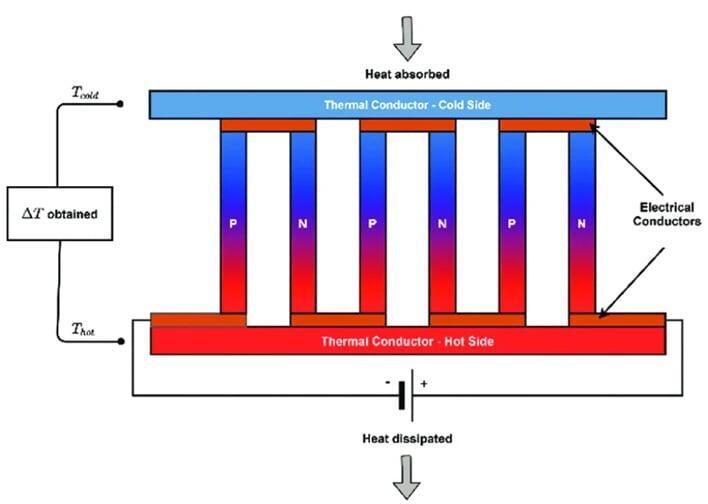

Thermoelectric cooling technology has gained increasing attention in recent years as manufacturers seek quieter, more energy-efficient solutions for specialised home appliances. Unlike traditional compressor-based refrigeration systems, thermoelectric coolers use the Peltier effect, where an electric current transfers heat from one side of a device to the other, creating a cooling effect without the need for refrigerants or moving mechanical parts.
This technology is particularly well suited to wine coolers and beverage centres, where maintaining a stable temperature and minimising vibration are essential. The absence of a compressor results in quieter operation and reduced vibration, helping to protect delicate wine sediments and preserve flavour characteristics. Thermoelectric systems are also compact, lightweight, and environmentally friendly, as they do not require refrigerant gases.
Recent developments in thermoelectric materials and electronic controls have improved cooling efficiency and temperature accuracy, making these appliances increasingly popular in homes, offices, and entertainment areas.
However, thermoelectric cooling does have limitations. It is generally less efficient than compressor technology when large temperature reductions are required, particularly in hot ambient conditions. Cooling performance can also be affected by room temperature, making these systems better suited to moderate climates and smaller-capacity appliances.
For wine and beverage storage, thermoelectric technology offers an elegant balance of quiet performance, convenience, and modern design.